Foundations That Carry Equipment Loads
Pad Construction in Florence for heavy farm machinery and agricultural buildings on clay soil that expands and contracts
Alabama clay soil moves with moisture changes, swelling during wet periods and shrinking during drought, creating stress on concrete pads that support heavy equipment or anchor building foundations. This expansion and contraction cracks undersized pads, tilts machinery out of level, and causes structural problems in buildings that weren't designed to accommodate soil movement. Peters Farms & Equipment co. handles pad construction for agricultural and construction applications throughout Florence, using engineered approaches that account for clay soil behavior and the static and dynamic loads that farm equipment generates. When you're setting up equipment that needs to stay level or building structures that can't tolerate foundation movement, the pad construction details determine whether you're dealing with ongoing maintenance issues or a stable platform that lasts for decades.
Engineered pad construction starts with excavating to stable depth, then building aggregate base layers that allow drainage and reduce direct contact between concrete and expansive clay. Thickness, reinforcement, and curing procedures all get adjusted based on expected equipment weight and whether loads remain static or involve vibration and impact from operating machinery. Grain bin pads carry different requirements than equipment storage pads, and building foundations need perimeter footings that extend below frost and active clay layers.
Schedule a consultation to discuss your specific equipment pad or building foundation requirements and site soil conditions.
What Proper Pad Construction Requires
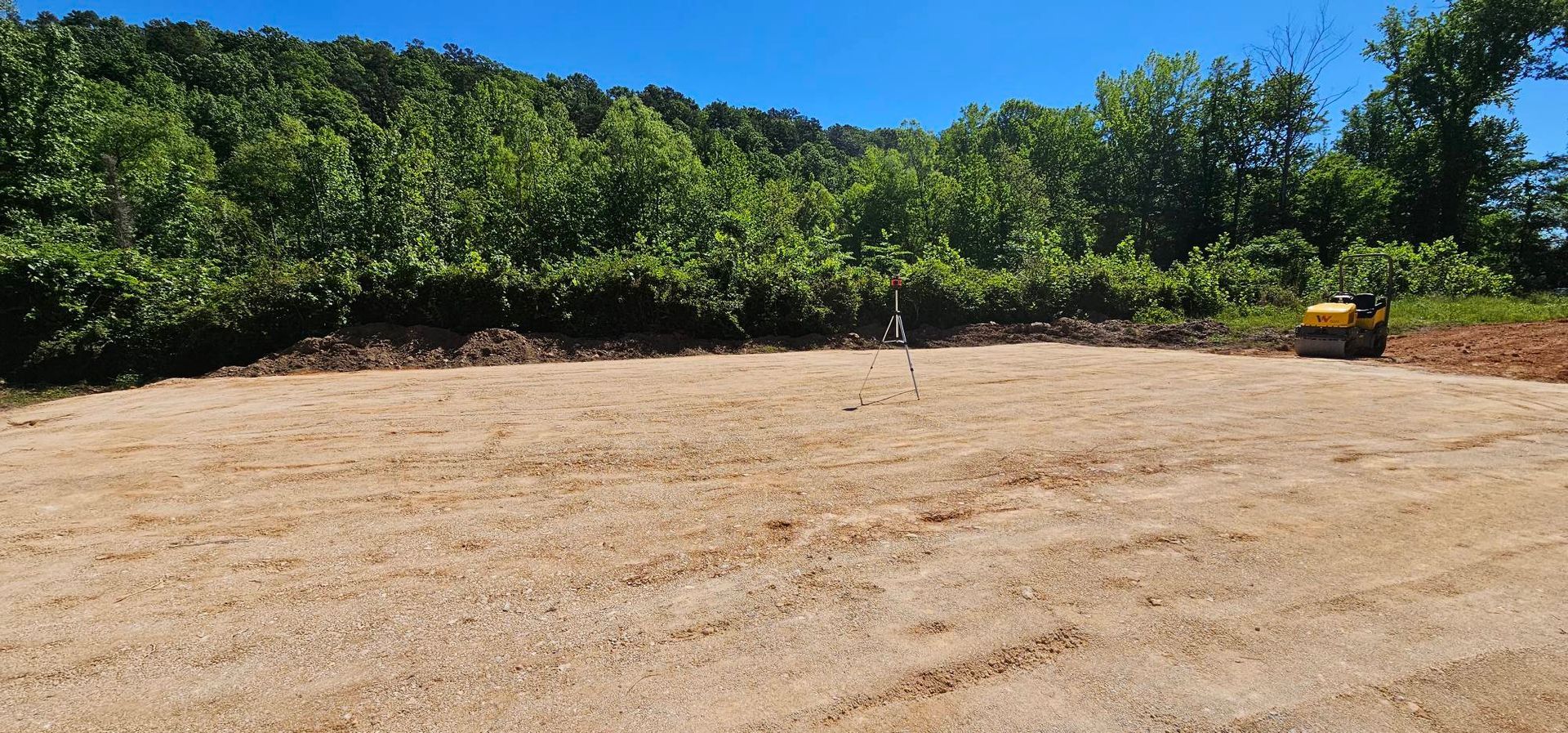
Site preparation involves removing topsoil and organic material, then proof-rolling the subgrade to identify soft spots that need additional excavation or stabilization before aggregate base goes down. Aggregate depth depends on soil conditions and expected loads, with heavier equipment requiring thicker base sections that distribute weight across larger soil areas and provide better drainage to keep moisture away from the clay subgrade. Concrete thickness and rebar placement get calculated based on load requirements, and control joints get cut or formed at proper spacing to direct cracking to predetermined locations rather than letting random cracks develop across the slab.
After construction is finished, you'll see level surfaces that don't develop low spots where water pools, equipment that stays properly aligned rather than tilting as soil shifts, and concrete that remains intact at the edges where clay movement creates the most stress. Buildings will sit on foundations that don't settle unevenly or crack at corners where differential movement concentrates, and drainage patterns will keep water moving away from pad edges where infiltration can undermine support.
Work proceeds weather permitting, since wet conditions prevent proper compaction of aggregate base layers and rain during concrete placement affects finishing and curing. Clay soil requires more attention to base preparation than sandy or gravelly soils, and some sites need additional drainage measures like perimeter trenches or underpad drain lines to manage water that would otherwise saturate the subgrade and accelerate expansion cycles.
Questions Before Starting Pad Construction
Pad construction questions often focus on how to build something that won't need constant releveling or crack repair, particularly given the soil movement that affects most sites in this area.
What makes clay soil pad construction different from other soil types?
Clay expands when wet and shrinks when dry, creating cyclical stress that concrete pads must accommodate through proper thickness, reinforcement, and base preparation. Sandy or gravelly soils don't move as much with moisture changes, allowing thinner pads with less base preparation for equivalent loads.
How thick do equipment pads need to be for agricultural machinery?
Thickness depends on equipment weight and whether loads stay stationary or move across the pad. Grain dryers and storage tanks often require six to eight inches of reinforced concrete on properly prepared aggregate base, while equipment storage pads for tractors and implements may need only four to six inches if the base is well-compacted and equipment doesn't concentrate loads on small footprints.
When should building foundations use deeper footings rather than slab-on-grade construction?
Deeper footings become necessary when buildings carry significant vertical loads, when you need to get below active clay layers that expand and contract seasonally, or when perimeter support prevents differential settlement that would crack walls or distort door frames in larger structures.
What base preparation prevents pad settlement in Florence clay soil?
Aggregate base depth of six to twelve inches, depending on pad size and loading, provides both load distribution and drainage. Proper compaction in lifts prevents future settling, and geotextile fabric between clay subgrade and aggregate stops clay from pumping up into the base layer during wet periods when equipment traffic generates pressure.
How does equipment access affect pad construction timing?
Heavy equipment needs dry ground access to excavate and place materials, making spring and fall construction more complicated when rain keeps soil saturated. Summer and early fall typically offer better working conditions, and scheduling around planting or harvest allows construction to proceed when equipment access doesn't interfere with farm operations.
Peters Farms & Equipment co. applies agricultural equipment pad expertise and clay soil construction experience to projects where foundation stability affects long-term equipment operation and building performance. Contact us to review your site conditions and load requirements for upcoming pad construction work.