Drainage Solutions for Tennessee River Valley Clay
Drainage Installation in Florence for managing water flow and preventing flooding on agricultural and residential properties
Water pools on the surface and drains slowly through Tennessee River valley clay soil, creating flooding problems that damage crops, saturate building foundations, and prevent equipment access during wet periods. French drains and gutter drainage systems manage water flow by intercepting runoff before it accumulates and directing it away from structures and fields. Peters Farms & Equipment co. installs drainage systems designed for clay soil conditions, where understanding how water moves through dense soil determines whether the system functions correctly when heavy rain arrives.
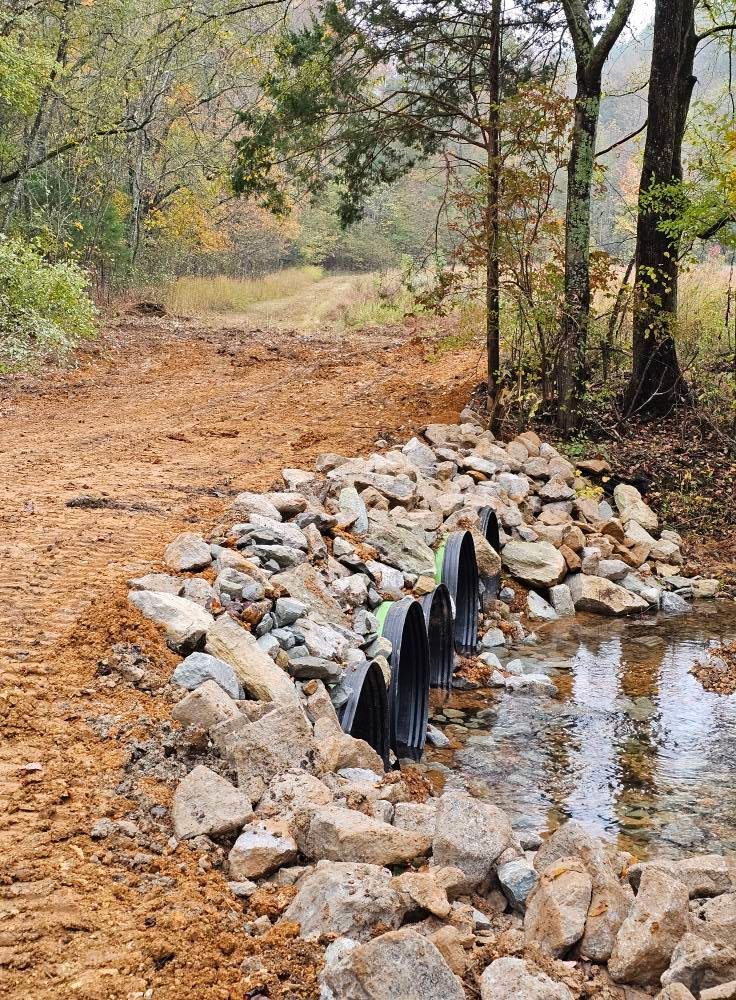
Drainage work involves excavating trenches to depths where water naturally collects, installing perforated pipe surrounded by gravel to create a flow path, and grading the system to direct water toward appropriate discharge points. Clay soil does not absorb water quickly, so drainage systems must account for slow percolation rates and design for surface water interception rather than relying on soil absorption alone.
Arrange a property evaluation to identify water flow patterns and determine drainage system requirements.
Why Clay Soil Drainage Requires Specialized Solutions
Installation begins with mapping where water accumulates during rain events and tracing how it moves across the property. Peters Farms & Equipment co. excavates trenches using equipment that minimizes soil compaction around the drainage path, then installs perforated pipe bedded in gravel that allows water to enter and flow freely. The gravel layer prevents clay from clogging the pipe perforations, which would stop water movement and cause the system to fail within months of installation.
After installation, you will notice that water no longer stands in low areas following rain, and saturated zones dry faster because subsurface drainage removes water before it accumulates at the surface. Fields become accessible to equipment sooner after wet weather, and building foundations stay dry because water is intercepted before it reaches the structure. The gravel-filled trench remains visible initially but blends with surrounding soil as vegetation regrows over the disturbed area.
Gutter drainage systems connect to downspouts and carry roof runoff away from foundations, preventing the concentrated flow that erodes soil and creates basement seepage. Mobile service capability allows installation at farm locations where drainage problems affect field productivity or building integrity, and the work proceeds when ground conditions allow proper trench excavation and backfill compaction.
Common Questions About This Service
Property owners dealing with standing water and saturated soil typically ask about system design, installation depth, and how clay soil affects drainage performance.
What is a French drain and how does it work in clay soil?
A French drain is a gravel-filled trench containing perforated pipe that intercepts subsurface water and directs it away from problem areas. In clay soil, the gravel creates a path for water to flow because clay itself drains too slowly to prevent surface flooding.
How deep do drainage trenches need to be in Florence?
Depth depends on where water collects and the slope available for drainage flow. Most French drains are excavated eighteen to thirty-six inches deep to reach the water table and provide enough fall for gravity drainage, though specific site conditions determine exact depth requirements.
Where does the water go after the drainage system collects it?
Water flows through the pipe to a discharge point at a lower elevation, typically a ditch, stream, or dry well where it can disperse without causing erosion or flooding elsewhere. The discharge location must be identified before installation begins to ensure the system has proper slope and capacity.
Can drainage systems be installed during wet weather?
Excavation work proceeds weather permitting because saturated clay soil collapses trench walls and prevents proper pipe bedding. Dry conditions allow clean trenching and backfill compaction, which are necessary for long-term system performance.
How long does a drainage system last in Alabama clay soil?
Properly installed systems with adequate gravel bedding and appropriate pipe slope function for decades if clay is prevented from entering the pipe through the gravel filter. Systems that omit gravel or use insufficient stone clog within years as clay migrates into the perforations.
Peters Farms & Equipment co. installs French drains and gutter drainage systems at agricultural and residential properties where clay soil creates persistent water management challenges. Contact the company to review drainage problems and discuss system design appropriate for your property's soil and topography.