Building Removal Done Right
Demolition in Florence for outdated agricultural structures and equipment removal during farm modernization projects
Older agricultural buildings reach the point where repair costs exceed their remaining useful life, and outdated equipment takes up space that modernized operations could use more productively. Barn structures with failing roofs, obsolete grain storage facilities, and equipment that's been sitting unused for years all present removal challenges, particularly when buildings contain materials that require separation for proper disposal or potential recycling. Peters Farms & Equipment co. provides demolition services for agricultural building removal and equipment demolition across Florence, handling projects where safe disassembly, material separation, and site cleanup matter as much as getting structures taken down. When you need to clear space for new construction or remove hazards that deteriorating buildings create, the demolition approach determines whether you're left with a clean site ready for the next use or a pile of mixed debris that complicates disposal and adds costs.
Safe demolition starts with evaluating structural condition to identify collapse risks, locating and disconnecting utilities that still serve the building, and determining which materials can be separated for recycling versus what needs disposal as mixed debris. Metal roofing and structural steel often have scrap value, timber framing from older buildings sometimes interests salvage operations, and concrete foundations usually get broken up for use as fill material or disposal at appropriate facilities. The heavy equipment fleet handles both careful disassembly when material separation matters and complete tear-down when buildings pose immediate safety hazards.
Schedule a site visit to review the structure or equipment you need removed and discuss demolition approach and material handling.
What Proper Demolition Accomplishes
Demolition planning involves determining the safest removal sequence, identifying any materials requiring special handling, and establishing access routes for equipment and material hauling. Buildings get assessed for asbestos or other hazardous materials that need abatement before demolition proceeds, and utility companies verify that power, gas, and water services are properly disconnected. The actual removal proceeds systematically, taking structures down in a controlled manner that prevents unexpected collapse and keeps workers and adjacent structures safe throughout the process.
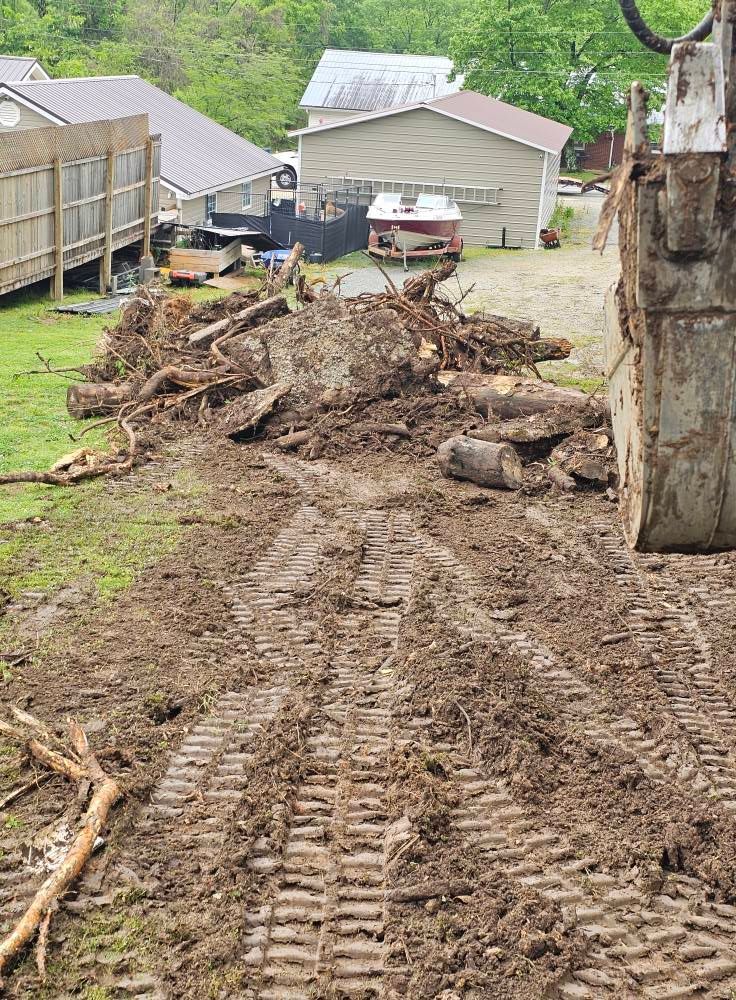
After demolition is complete, you'll see the site cleared to grade with foundations removed or broken below surface level, debris hauled off or separated into designated piles for different disposal or recycling streams, and the area left in condition for immediate use or ready for new construction. Vegetation that grew around the structure gets cleared, and any soil disturbance from equipment access gets smoothed to match surrounding grades so water drains properly rather than pooling in tire ruts or excavation areas.
Some projects require permits or notifications to local authorities, particularly for larger structures or buildings located near property boundaries. Material disposal follows local regulations, with separated recyclables going to appropriate facilities and mixed demolition debris delivered to landfills permitted to accept construction waste. Weather affects scheduling when buildings are unstable and rain or wind could cause collapse before controlled demolition proceeds.
What to Expect During Demolition
Demolition projects raise practical questions about timing, site access, and what happens to materials once structures come down, particularly on working farms where demolition needs to fit around ongoing operations.
What preparation is required before agricultural building demolition begins?
Utility disconnection verification prevents accidents involving live electrical service or active gas lines. Hazardous material inspection identifies asbestos siding or roofing that requires specialized abatement, and contents removal clears equipment or stored materials that would complicate demolition or create disposal issues.
How are materials separated during demolition for recycling or disposal?
Metal components get pulled separately as structures come down, since scrap metal facilities won't accept material mixed with wood or other debris. Lumber separation makes sense when timber has salvage value or when keeping wood separate reduces disposal costs. Concrete and masonry typically get broken up on-site and either retained as fill material or hauled to facilities that process it for aggregate use.
When should foundation removal be included in demolition scope?
Foundations staying above grade create obstacles for equipment operation and future site use, making removal necessary when the area will be farmed or when new construction requires level ground. Foundations broken below surface level allow normal tillage or grading without causing equipment damage or creating drainage problems.
What demolition timeline is typical for agricultural buildings in the Florence area?
Single-story equipment sheds or small barns often come down in one to three days depending on size and material separation requirements. Larger structures with multiple levels or heavy timber framing take longer, particularly when careful disassembly preserves material value or when access limitations restrict equipment size and require more manual work.
How does agricultural project experience affect demolition approach?
Experience with farm buildings means understanding which structures can be pulled down quickly and which need systematic disassembly to prevent uncontrolled collapse. Equipment capability for handling large components, site access familiarity, and knowing local disposal options all contribute to efficient project completion without surprises that delay work or increase costs.
Heavy equipment capability and agricultural demolition expertise allow Peters Farms & Equipment co. to handle structure removal and equipment demolition on farms where site cleanup and material handling affect project costs and timelines. Contact us to discuss your specific demolition requirements and schedule a site assessment.